The full engineering story
The platform
Two chips, each doing what it’s best at:
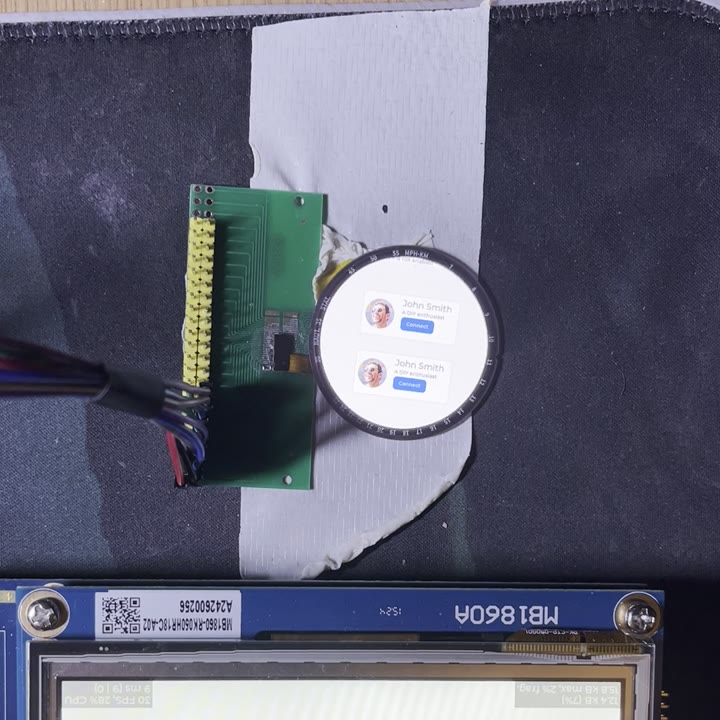
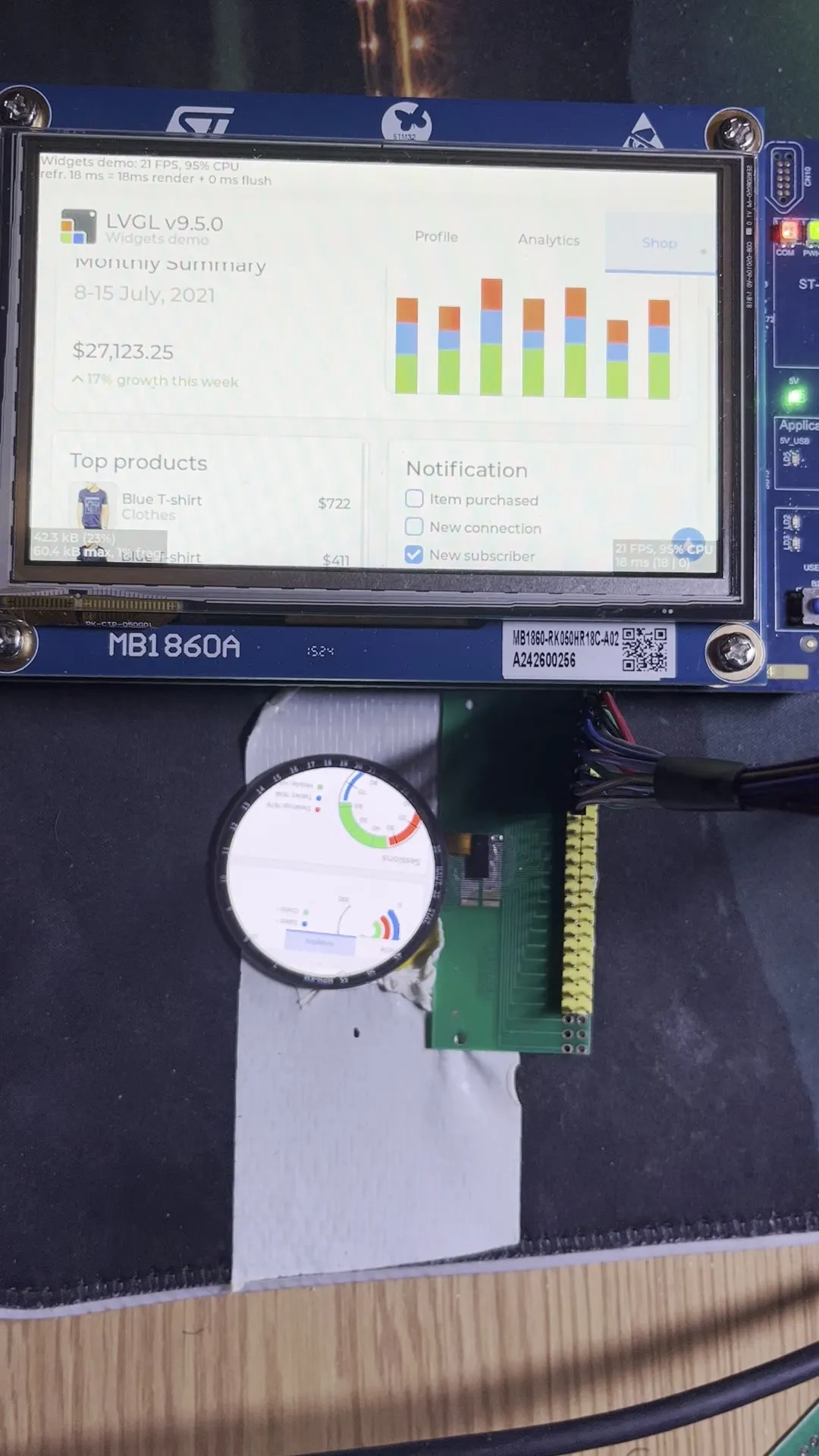
- An STM32U5G9 running Zephyr. It drives the 466×466 round AMOLED over MIPI-DSI with the NeoChrom GPU, plus the touch, NFC (ST25R3916), Sub-GHz (CC1101), infrared, audio (ES8311), the IMU and the fuel gauge.
- An ESP32-C5 running ESP-IDF. It’s the radio, with BLE 5.4 (NimBLE) to the phone, linked to the U5 over a 921,600-baud UART bridge.
- A Flutter companion app, with firmware releases delivered from AWS S3 and push notifications through FCM, built by a GitHub Actions pipeline.
Three apps sit on the same driver base:
- A smartwatch face host for designs made in LVGL Pro.
- A touchscreen research multi-tool:
- NFC card reading and emulation
- Sub-GHz capture, decode and replay
- Infrared learn and send
- Audio record and playback
- A headless serial bench menu that mirrors the same screens, for fast iteration without the display.
The hard part: updates that never brick the watch
Firmware travels phone → BLE → ESP32-C5 → UART → STM32U5 → flash → MCUboot. It took three designs to get reliable:
- A custom windowed protocol. It delivered 99.6% of frames. The 0.4% it lost at 921,600 baud cascaded into failed transfers.
- Zephyr’s standard MCUmgr/SMP over the bridge. This exposed a chain of real bugs:
- a DMA erratum that silently swallowed UART transmissions;
- flash writes to the second flash bank that reported success but didn’t stick;
- a buffered-write path that, after any retry, dropped the last ~147 bytes, which hold the image’s signature. MCUboot then refused the image.
- Direct flash writes with sequence-checked chunks and an end-to-end SHA-256. Reliable: 792 KB in about 26 seconds, upgraded v1.0 → v1.1 → v1.2 on real hardware.
Read the full write-up: Three designs to get firmware updates that never brick a watch.
Rendering and power
- Turning on GPU2D took the round display to 28 fps at 25% CPU, against 22 fps at 74% when the CPU draws everything.
- Idle power is staged: dim the display, blank it, stop the U5, sleep the radio, put the DSI link into ultra-low-power mode, then deep idle.